I am raw html block.
Click edit button to change this html<

The horses no one wanted: why small breeders may hit gold!
Jun 29, 2026
BY ED BALCEWICH PHOTOGRAPHY: ED BALCEWICH; MARGIE FORBES;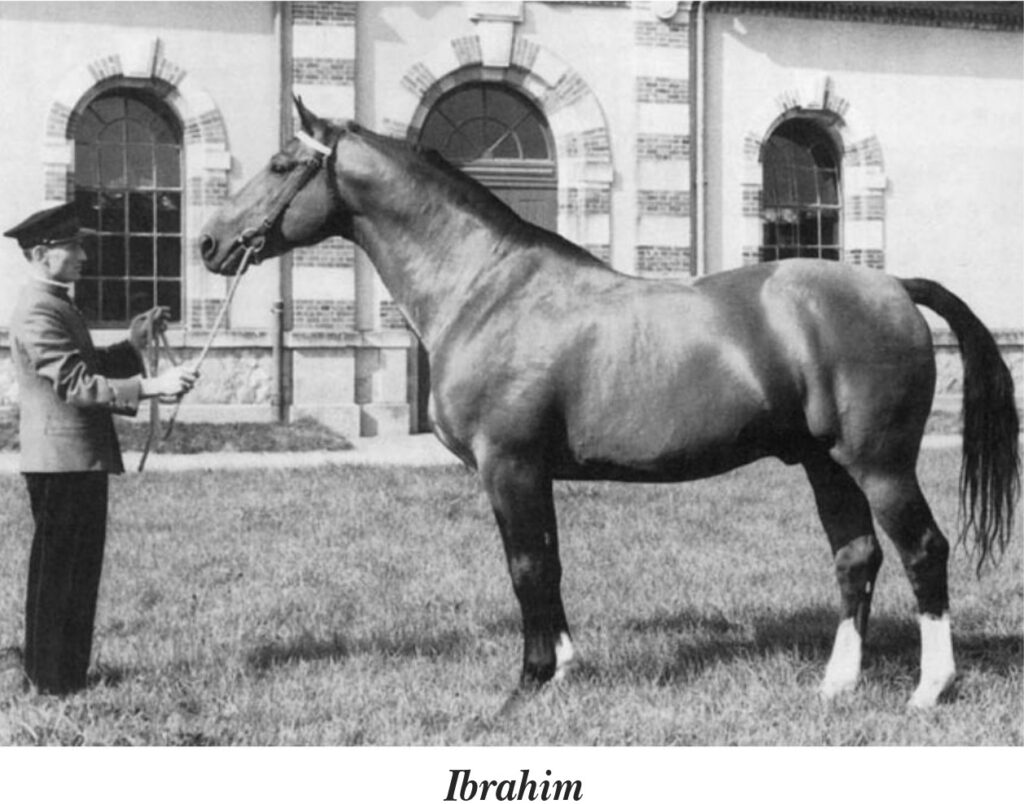 In the summer of 1956, at a local in-hand show in Caen, Normandy, a horse trader named Alfred Lefevre handed over 500 francs, the equivalent of roughly $80 at the time, for a four-year-old bay stallion that nobody else particularly wanted.
The breeders of Sainte-Marie-du-Mont were averse to novelties. They were not excited about this horse. He was unusual, modern in type, the product of bloodlines the local Normandy breeders regarded with suspicion. His name was Ibrahim.
The State Stud at Saint-Lô stationed him at Sartilly, where he covered mares for nearly two decades in relative obscurity. The stubborn Normandy breeders, unimpressed, considered him fit mainly for their cob mares, in local terms, a sign of outright disgrace for a stallion. By 1961 his lack of popularity had reached such a point that he could no longer attract sport horse mares at all. He remained relatively unknown during his lifetime.
Then came the summer of 1970 at Fontainebleau. In a single week, Ibrahim's offspring dominated the jumping finals so completely that even his most stubborn critics could no longer look away. His four-year-olds, Alcazar D, Aurore C, Azimut, Arteban, and a young horse named Almé, swept the jumping finals. When the World Equestrian Games returned to Normandy in 2014, the stallion line of Ibrahim provided 36 entries in the showjumping competition alone. Today the vast majority of the world’s top showjumpers carry his blood. The pedigrees of champions on five continents trace back to a stallion that the Normandy breeders could barely be persuaded to use.
Ibrahim became famous after his death. Not while he was alive. He was not alone.
In the summer of 1956, at a local in-hand show in Caen, Normandy, a horse trader named Alfred Lefevre handed over 500 francs, the equivalent of roughly $80 at the time, for a four-year-old bay stallion that nobody else particularly wanted.
The breeders of Sainte-Marie-du-Mont were averse to novelties. They were not excited about this horse. He was unusual, modern in type, the product of bloodlines the local Normandy breeders regarded with suspicion. His name was Ibrahim.
The State Stud at Saint-Lô stationed him at Sartilly, where he covered mares for nearly two decades in relative obscurity. The stubborn Normandy breeders, unimpressed, considered him fit mainly for their cob mares, in local terms, a sign of outright disgrace for a stallion. By 1961 his lack of popularity had reached such a point that he could no longer attract sport horse mares at all. He remained relatively unknown during his lifetime.
Then came the summer of 1970 at Fontainebleau. In a single week, Ibrahim's offspring dominated the jumping finals so completely that even his most stubborn critics could no longer look away. His four-year-olds, Alcazar D, Aurore C, Azimut, Arteban, and a young horse named Almé, swept the jumping finals. When the World Equestrian Games returned to Normandy in 2014, the stallion line of Ibrahim provided 36 entries in the showjumping competition alone. Today the vast majority of the world’s top showjumpers carry his blood. The pedigrees of champions on five continents trace back to a stallion that the Normandy breeders could barely be persuaded to use.
Ibrahim became famous after his death. Not while he was alive. He was not alone.
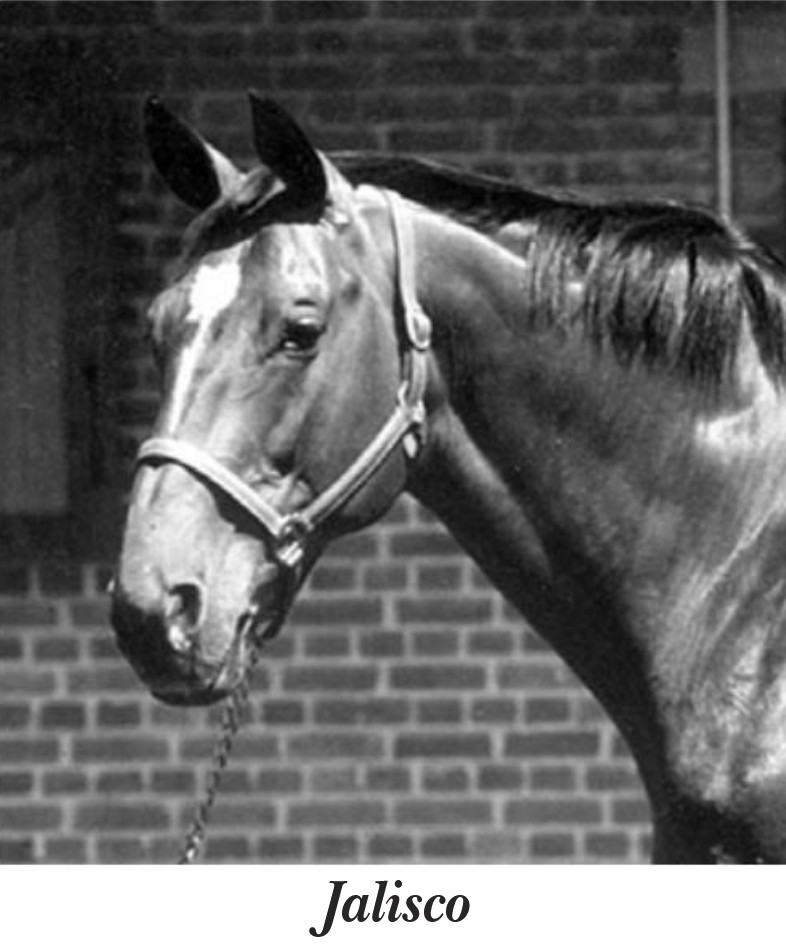 A gallery of the overlooked
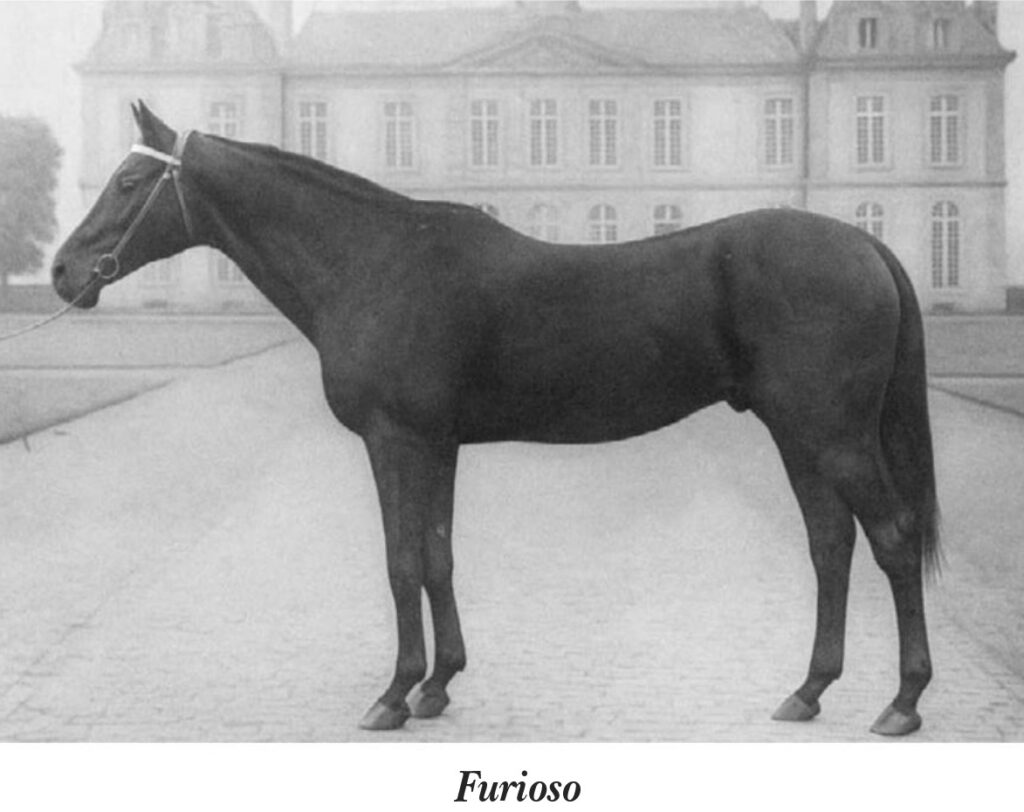
Furioso xx (1939-1968, Thorough-bred): Twenty-one career starts. Zero wins. Described as well balanced but with slightly knock-kneed forelegs and tight hocks, he was bought cheaply for the French National Stud after World War II because nobody else wanted a failed racehorse. His son Furioso II transformed the Oldenburg breed into a powerhouse of modern jumping and dressage. His other son Mexico reshaped the Dutch Warmblood. Furioso himself became the leading sire of jumping horses in France from 1954 to 1961. Zero wins on the track. Incalculable influence on the modern sport horse
A gallery of the overlooked
Furioso xx (1939-1968, Thorough-bred): Twenty-one career starts. Zero wins. Described as well balanced but with slightly knock-kneed forelegs and tight hocks, he was bought cheaply for the French National Stud after World War II because nobody else wanted a failed racehorse. His son Furioso II transformed the Oldenburg breed into a powerhouse of modern jumping and dressage. His other son Mexico reshaped the Dutch Warmblood. Furioso himself became the leading sire of jumping horses in France from 1954 to 1961. Zero wins on the track. Incalculable influence on the modern sport horse
 Cor de la Bryère (1968–2000, Selle Français): The story almost ended before it began — twice. His grandmother, Vestale du Bois Margot, was one of a group of mares whose owner died leaving no heir. The neighbours took charge of disposing of the breeding stock, sending most to slaughter. Vestale escaped by sheer luck, sold to a stranger in the Sarthe province. From her came the dam line that produced Cor de la Bryère. Then, in 1970, the French selection committee visited his owner Xavier Ribard and delivered their verdict plainly: not breeding stock, too much of a sport horse, better to geld him. Ribard sold him instead. A Holstein inspection committee discovered him almost by accident while evaluating an entirely different stallion nearby. They brought him to Germany and within years he had revolutionized warmblood jumping breeding. He is present in over 70% of modern Holsteiner pedigrees and is known today as the Reserve Stallion of the Century. Nearly sent to slaughter before he was born. Nearly gelded before he could breed. The influence of the French colt that no one wanted lives on and on and on.
Voltaire (1979–2004, Hanoverian): Rejected by the Oldenburg licensing commission for being too small at just 1.62m, with a significant hoof crack counted against him. When finally presented to the KWPN performance test he was graded dead last, 14th out of 14, despite excellent jumping marks. Eventually approved, he became one of the greatest jumper sires of all time with over 30 licensed sons in Europe, and his son Kannan produced Olympic champion Nino des Buissonnets. Graded last. Finished first. As we will see, his blood flows quietly through our own program, in a horse that one well-known expert advised us to geld.
Tesio's Catnip xx (foaled circa 1911, Thoroughbred mare): In 1915 Federico Tesio paid 75 guineas, approximately $375 at the time, a modest sum for what would become the most valuable broodmare in Thoroughbred history, for a mare at the Newmarket December Sales that nobody else wanted. She was not fashionable, not celebrated, not expensive. She had the pedigree architecture Tesio was looking for, and that was enough. From Catnip xx he bred Nogara xx, Italy's champion filly of 1931. From Nogara xx came Nearco xx, unbeaten in fourteen races and the foundational sire of the modern Thoroughbred worldwide. The entire dynasty traces back to a mare nobody else bid on. Tesio was not buying reputations. He was buying architecture.
The pattern is identical across every one of these horses, across different breeds, countries, and decades. The horses that reshaped breeding were frequently not the ones the establishment was chasing. They were the ones the right person recognized before the consensus caught up. The hard truth is that most people in this sport are buying reputations, not reading pedigrees. Unless someone important declares a horse special, many breeders have no independent mechanism to identify value. This creates a permanent market inefficiency. For the small breeder willing to do the work, that inefficiency is not a problem. It is an opportunity.
Today, rural Manitoba, two back-burner horses
Nobody thought anything would come of it. That is not a figure of speech. The people around us, experienced breeders, knowledgeable horsemen, people who had spent their lives around sport horses, looked at what we were doing in rural Manitoba and were not impressed. We had a stallion that someone had left to graze for years, and when the owner needed to sell him at a fire sale price, there were no takers. We had a mare that her owner had no time for. We had no European connections, no generations of breeding experience behind us, and no commercial operation to speak of. What we had was curiosity, time, and the willingness to look a little deeper than most people bother to look.
Across the four foals we produced in 2021 and 2022, every one has shown the athleticism, temperament, and competitive instinct we hoped the blueprint would produce — a 100% hit rate across every foal in their first competitive season. We do not advertise this. The horses are young and still developing, but the early results have exceeded what even we dared to expect.
This article is written specifically for the small breeder. Not the large commercial operation with fifty mares and a European scout on retainer. The person with a handful of horses, a limited budget, and the persistent feeling that the fashionable cross everyone is chasing this season is not the only path forward. If that sounds familiar, read on.
The horse in the barn
I came to horses in my late fifties, through my daughter's riding. By profession I am a Cross Border Portfolio Manager and Stock Trader, dual licensed in Canada and the USA. By discipline I am a Brazilian Jiu-Jitsu black belt instructor and coach — an IBJJF World Masters Champion and multiple medallist. During my spare time, via online and distance learning, I completed two certificates from the University of Florida in Equine Genetics and a certificate from Vanderbilt University in Large Language Model AI prompting. I utilize AI every day, for market and equity research, and for deep dives into sport horse pedigree analysis. The tools have changed. The discipline behind using them has not.
In BJJ, the techniques proven over a century of competition, the rear naked choke, the armbar, the triangle, are not abandoned because something new is fashionable. You master what works and apply it with precision, which leads to a very high submission rate. In trading, we didn't invent the candlestick chart, but through learned pattern recognition we know exactly how to read them, proven patterns that produce outsized results and repeat across 200 years of market history. The edge comes from recognizing them faster and executing with discipline. I brought exactly that discipline to breeding.
Grama Open Main
In 2017, I bought a horse from an owner who had no time for him, a Selle Français stallion named Grama Open Main, affectionately known as Chachi. Imported from Argentina in 2010, he had placed first at his stallion licensing and second nationally, earning elite scores including a 10 for scope and 9s for jump technique, movement, and gaits. We knew he had something. We just didn't yet know exactly what. Ownership changes cut short his career, and by the time I found him he had spent three years in a stall and two more at pasture. He was, in the language of this article, a back-burner horse.
What attracted me had nothing to do with pedigrees. Chachi had a personality that was impossible to ignore, funny, warm, and magnetic, the kind of horse that makes you feel he is genuinely glad you came. Not exactly the behaviour one associates with stallions, and yet here I was, a complete newcomer to the horse world, buying one. I later learned this warmth is a well-documented characteristic of the Selle Français and many warmbloods generally, a kind intelligence they pass reliably to their offspring. In Chachi's case it proved one of the most consistent things he transmitted to his foals.
After two years of trail riding and winter fields across the Manitoba prairie, my daughter Ainsley and I reconnected Chachi with Jeff From, his former rider, a lifelong horseman, farrier, competitive showjumper, and experienced breeder. When Chachi heard Jeff's voice for the first time after years apart, he could hardly contain himself — jumping for joy, the reunion written all over him. Jeff said simply: "I got my best friend back."
Cor de la Bryère (1968–2000, Selle Français): The story almost ended before it began — twice. His grandmother, Vestale du Bois Margot, was one of a group of mares whose owner died leaving no heir. The neighbours took charge of disposing of the breeding stock, sending most to slaughter. Vestale escaped by sheer luck, sold to a stranger in the Sarthe province. From her came the dam line that produced Cor de la Bryère. Then, in 1970, the French selection committee visited his owner Xavier Ribard and delivered their verdict plainly: not breeding stock, too much of a sport horse, better to geld him. Ribard sold him instead. A Holstein inspection committee discovered him almost by accident while evaluating an entirely different stallion nearby. They brought him to Germany and within years he had revolutionized warmblood jumping breeding. He is present in over 70% of modern Holsteiner pedigrees and is known today as the Reserve Stallion of the Century. Nearly sent to slaughter before he was born. Nearly gelded before he could breed. The influence of the French colt that no one wanted lives on and on and on.
Voltaire (1979–2004, Hanoverian): Rejected by the Oldenburg licensing commission for being too small at just 1.62m, with a significant hoof crack counted against him. When finally presented to the KWPN performance test he was graded dead last, 14th out of 14, despite excellent jumping marks. Eventually approved, he became one of the greatest jumper sires of all time with over 30 licensed sons in Europe, and his son Kannan produced Olympic champion Nino des Buissonnets. Graded last. Finished first. As we will see, his blood flows quietly through our own program, in a horse that one well-known expert advised us to geld.
Tesio's Catnip xx (foaled circa 1911, Thoroughbred mare): In 1915 Federico Tesio paid 75 guineas, approximately $375 at the time, a modest sum for what would become the most valuable broodmare in Thoroughbred history, for a mare at the Newmarket December Sales that nobody else wanted. She was not fashionable, not celebrated, not expensive. She had the pedigree architecture Tesio was looking for, and that was enough. From Catnip xx he bred Nogara xx, Italy's champion filly of 1931. From Nogara xx came Nearco xx, unbeaten in fourteen races and the foundational sire of the modern Thoroughbred worldwide. The entire dynasty traces back to a mare nobody else bid on. Tesio was not buying reputations. He was buying architecture.
The pattern is identical across every one of these horses, across different breeds, countries, and decades. The horses that reshaped breeding were frequently not the ones the establishment was chasing. They were the ones the right person recognized before the consensus caught up. The hard truth is that most people in this sport are buying reputations, not reading pedigrees. Unless someone important declares a horse special, many breeders have no independent mechanism to identify value. This creates a permanent market inefficiency. For the small breeder willing to do the work, that inefficiency is not a problem. It is an opportunity.
Today, rural Manitoba, two back-burner horses
Nobody thought anything would come of it. That is not a figure of speech. The people around us, experienced breeders, knowledgeable horsemen, people who had spent their lives around sport horses, looked at what we were doing in rural Manitoba and were not impressed. We had a stallion that someone had left to graze for years, and when the owner needed to sell him at a fire sale price, there were no takers. We had a mare that her owner had no time for. We had no European connections, no generations of breeding experience behind us, and no commercial operation to speak of. What we had was curiosity, time, and the willingness to look a little deeper than most people bother to look.
Across the four foals we produced in 2021 and 2022, every one has shown the athleticism, temperament, and competitive instinct we hoped the blueprint would produce — a 100% hit rate across every foal in their first competitive season. We do not advertise this. The horses are young and still developing, but the early results have exceeded what even we dared to expect.
This article is written specifically for the small breeder. Not the large commercial operation with fifty mares and a European scout on retainer. The person with a handful of horses, a limited budget, and the persistent feeling that the fashionable cross everyone is chasing this season is not the only path forward. If that sounds familiar, read on.
The horse in the barn
I came to horses in my late fifties, through my daughter's riding. By profession I am a Cross Border Portfolio Manager and Stock Trader, dual licensed in Canada and the USA. By discipline I am a Brazilian Jiu-Jitsu black belt instructor and coach — an IBJJF World Masters Champion and multiple medallist. During my spare time, via online and distance learning, I completed two certificates from the University of Florida in Equine Genetics and a certificate from Vanderbilt University in Large Language Model AI prompting. I utilize AI every day, for market and equity research, and for deep dives into sport horse pedigree analysis. The tools have changed. The discipline behind using them has not.
In BJJ, the techniques proven over a century of competition, the rear naked choke, the armbar, the triangle, are not abandoned because something new is fashionable. You master what works and apply it with precision, which leads to a very high submission rate. In trading, we didn't invent the candlestick chart, but through learned pattern recognition we know exactly how to read them, proven patterns that produce outsized results and repeat across 200 years of market history. The edge comes from recognizing them faster and executing with discipline. I brought exactly that discipline to breeding.
Grama Open Main
In 2017, I bought a horse from an owner who had no time for him, a Selle Français stallion named Grama Open Main, affectionately known as Chachi. Imported from Argentina in 2010, he had placed first at his stallion licensing and second nationally, earning elite scores including a 10 for scope and 9s for jump technique, movement, and gaits. We knew he had something. We just didn't yet know exactly what. Ownership changes cut short his career, and by the time I found him he had spent three years in a stall and two more at pasture. He was, in the language of this article, a back-burner horse.
What attracted me had nothing to do with pedigrees. Chachi had a personality that was impossible to ignore, funny, warm, and magnetic, the kind of horse that makes you feel he is genuinely glad you came. Not exactly the behaviour one associates with stallions, and yet here I was, a complete newcomer to the horse world, buying one. I later learned this warmth is a well-documented characteristic of the Selle Français and many warmbloods generally, a kind intelligence they pass reliably to their offspring. In Chachi's case it proved one of the most consistent things he transmitted to his foals.
After two years of trail riding and winter fields across the Manitoba prairie, my daughter Ainsley and I reconnected Chachi with Jeff From, his former rider, a lifelong horseman, farrier, competitive showjumper, and experienced breeder. When Chachi heard Jeff's voice for the first time after years apart, he could hardly contain himself — jumping for joy, the reunion written all over him. Jeff said simply: "I got my best friend back."
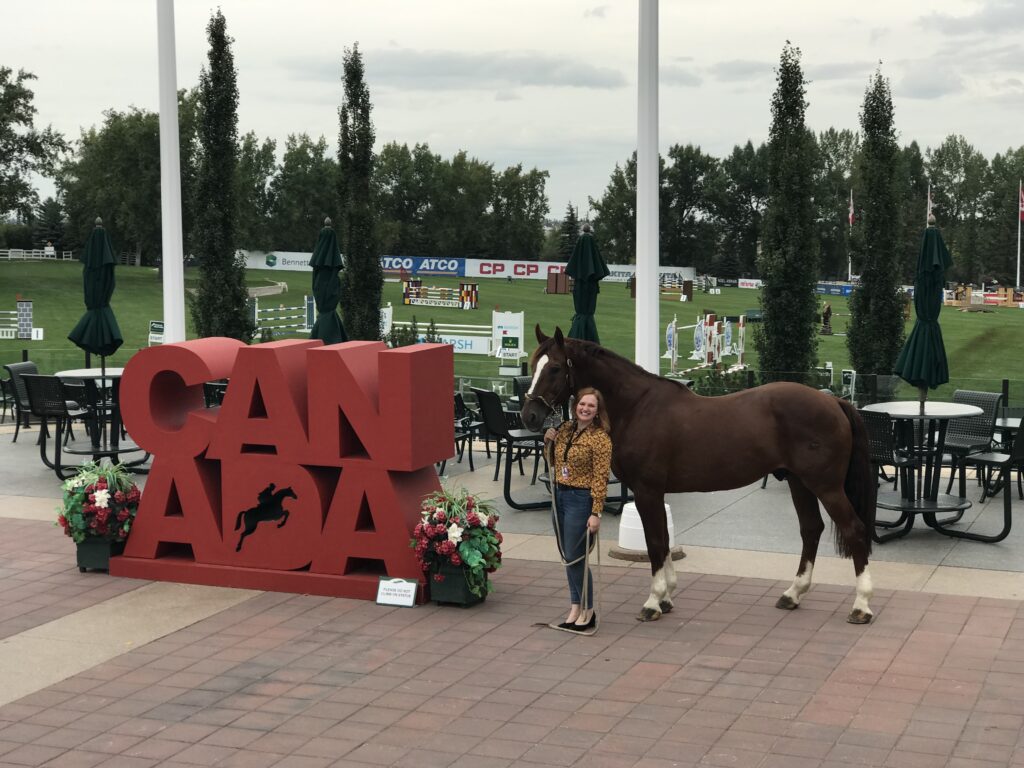
Grama Open Main at the Spruce Meadows Masters
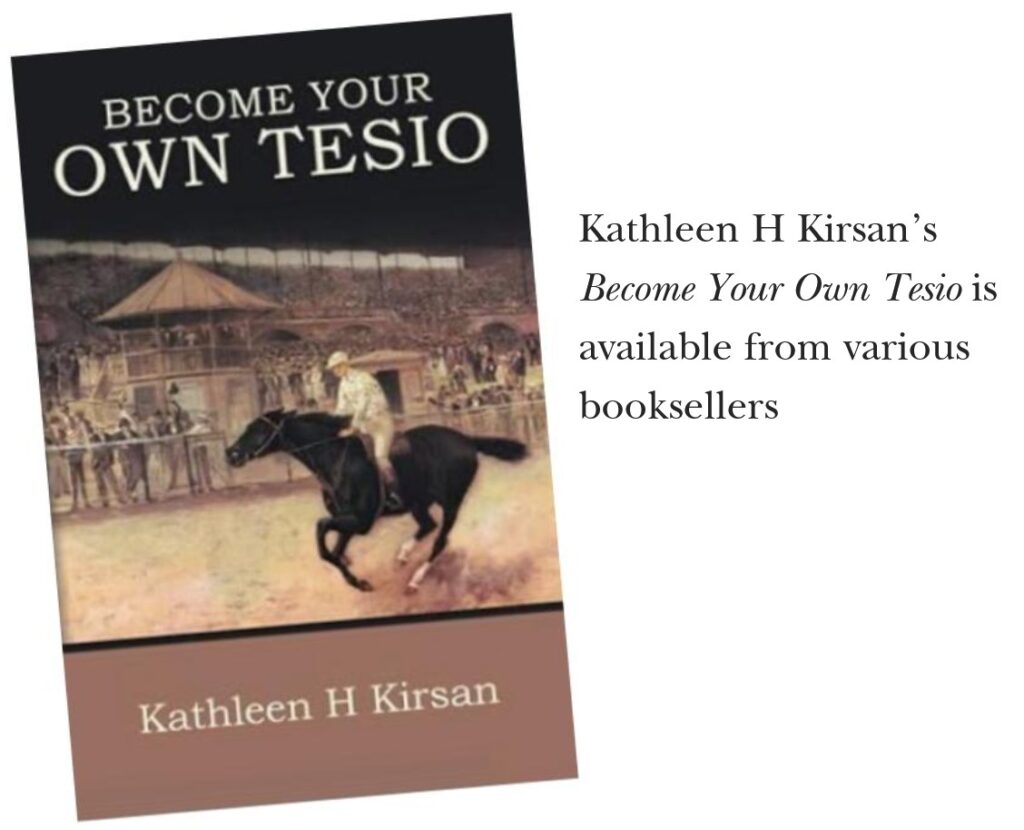
What I didn't know, and what I found - the small breeder's Cheat Code! When I started looking at Chachi's pedigree I knew almost nothing about how to read one. What I did know was data and repeating patterns. The same discipline I apply in trading and BJJ, following evidence rather than fashion, recognizing structures that have proven themselves over time, turned out to apply just as cleanly to bloodlines. I found Kathleen H. Kirsan's sport horse breeding books and began working through them seriously. For any breeder willing to study pedigrees, her book Become Your Own Tesio is quite simply the cheat code. I will leave readers to discover it for themselves. When I finally looked properly at what Chachi was carrying, I understood why his offspring kept showing up at Manitoba competitions four and five at a time. On the sire side, Chachi traces back to Ibrahim through three separate familial conduits, through his grandsire Bayard d'Elle, a superstar in his own right, through his great grandsire Quito de Baussy, a superstar son of Jalisco B, and through Elf III. Three separate paths back to the same foundational sire. Not old blood. Foundational blood, the kind that keeps appearing in Olympic and Grand Prix pedigrees decade after decade. The licensing judges who gave him a 10 for scope had seen the expression of it. The pedigree explained why. When I brought this analysis to a well-known stallion agent in the French sport horse world, I was advised to castrate him. The irony was difficult to reconcile, the same agent stood a son of Voltaire at stud, and Chachi is out of a Voltaire mare, making that stallion's progeny and Chachi at least half-siblings in bloodline terms. When I brought it to a respected Ontario breeder, I was told he was not a modern sport horse, that the blood was old and not in demand. The mare nobody had time for Jeff had acquired Zena QV from a friend who had no time for her training and pretty much said that if you want her, take her. She is a Canadian Warmblood by Quite Easy, a son of Quidam de Revel, with Burggraaf close up on the dam’s side; three international superstars in the first two generations of her pedigree. How could anyone miss that, unless they weren't looking? Like Chachi, she was a back-burner horse, quietly carrying more than anyone had taken the trouble to look for. Regular readers will recall from our article in the May 2026 issue of World Breeding News for Sport Horses how the 2019 Spruce Meadows Masters and Darry Lou's victory deepened our understanding of what we had. For new readers, that article, titled "Why Start From Scratch When the Breeding Blueprint Already Exists?", is available through the magazine's back issue archive. When Kathleen Kirsan confirmed that Halo DF, our filly bred from Chachi and Zena QV, “was structurally almost identical to Darry Lou in the architecture” that matters most, that perked up my ears considerably. The team Jeff From is the foundation of the program, a lifelong horseman, farrier, and experienced breeder whose decades of relationships in the Manitoba horse community made everything possible. Nehal Jora, a talented young rider who came to Manitoba as a foreign student, found his way to our barn by chance and has become the horses' most trusted partner in the ring. Patty Alfonso, one of Jeff's lifelong friends and neighbors, is our jump coach, a horsewoman who was competing in Spruce Meadows' very first season in 1975 and who was there by personal invitation for the 2025 Spruce Meadows Masters to celebrate its 50th anniversary last September. When someone with that depth of experience looks at your horses and lights up, you do not take it lightly. What happened next We shared our excitement with the local breeding community. The long-standing breeders had their own ideas, their own programs, their own certainties. What we were doing with two back-burner horses and a methodology most of them had never heard of was met with quiet indifference. All we heard were crickets. Then Jeff watched our foals being started as three-year-olds and said, half stunned, "Holy Crap, I think we have four Grand Prix horses." In their first year of competition, Halo DF won the 0.75m Heritage Classic Provincial Championship series and Amethyst DF won the MHJA 0.85m Provincial Championship. Two horses. Two Provincial Championships. First time out. The crickets went quiet.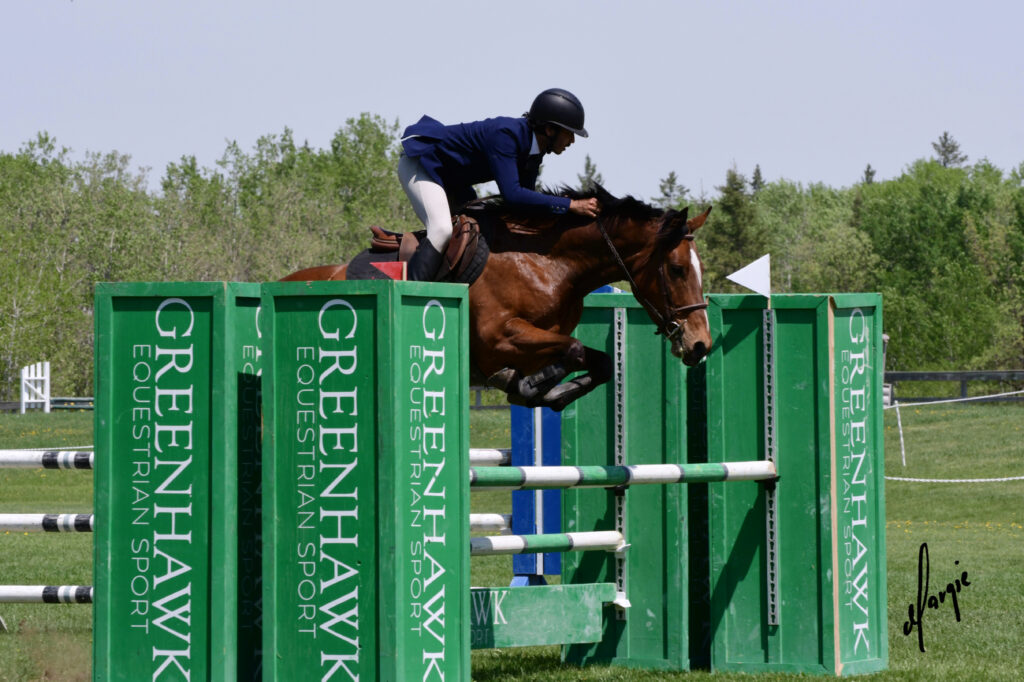
Halo DF - the mare sired by Chachi out of Zena QV
Regular readers will know Halo's story from our article from the May issue of this year. What they may not know is how close her sister Amethyst came to never getting her chance. She grew fast as a youngster, was a little unbalanced and clumsy at her first show, and we briefly considered buying out Jeff's half of her because my daughter wanted a manageable horse for her dressage riding. We genuinely thought she might not be suited to jumping. Then came her second show. What we had read as slowness was in fact scope, and deeply deceptive speed. Amethyst was launching from a completely different distance than every other horse in the ring because she simply did not need to be as close. Her massive stride covered the ground in a way that looked unhurried and was anything but. She was not slow. She was scoping from another zip code. She has extraordinary speed and has finished on the podium against older and more experienced horses at nearly every show since. What makes it more remarkable is what you see at the barn. At shows, while other warmbloods pace their stalls and work themselves into a lather, our horses sleep on the ground. All of them. Zen calm in the barn, and then the switch flips in the ring. Halo becomes our Spice Queen the moment she enters the arena, quick, sharp, competitive, turning and burning in a jump-off with a fire that surprises people who only saw her dozing in her stall an hour earlier. That on-off switch is not something you can train. It comes from somewhere much deeper.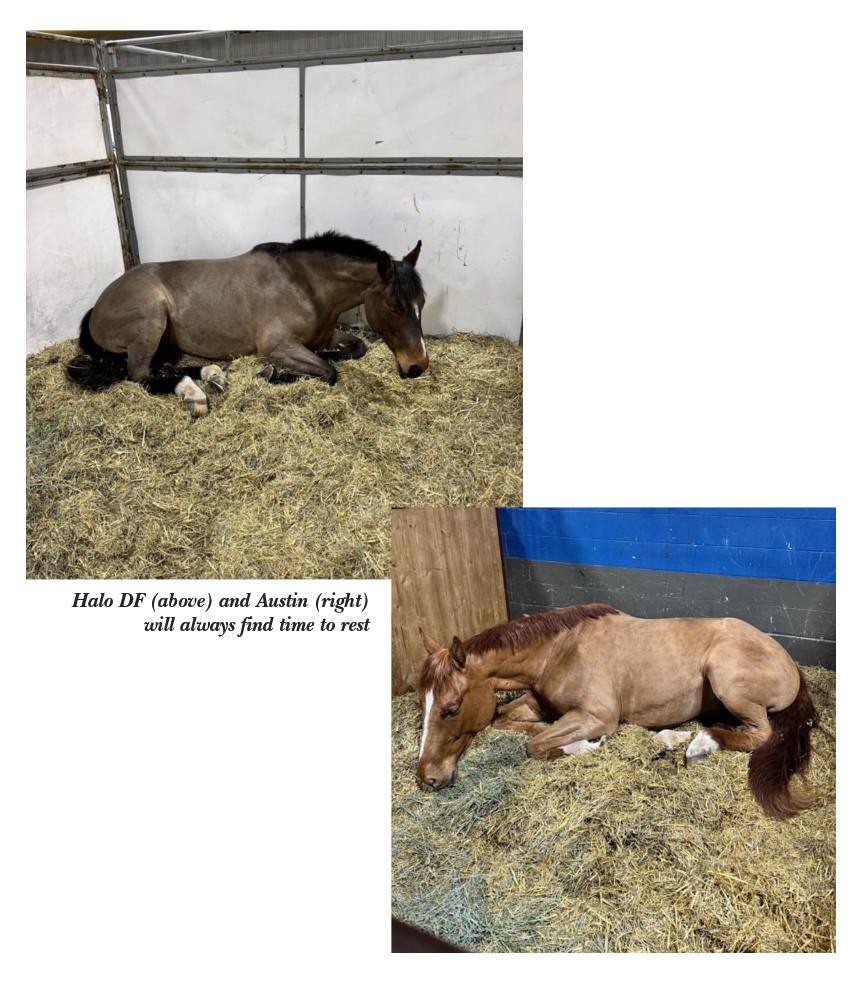 The lesson the history of Ibrahim, Voltaire, and Cor de la Bryère had already taught us: the first impression of an exceptional horse is frequently wrong. Read what is actually there.
Looking closely at the puzzle pieces
The back-burner horse, the one with the older pedigree that does not fit the current fashion, the one standing in a field waiting for someone to look, is exactly the kind of asset that gets overlooked in a large operation and recognized in a small one. Small breeders, by necessity, look harder. And sometimes, looking harder is all it takes.
Fashion breeding has its place, but it is worth understanding its limitation. Lisa Lourie of Spy Coast Farm, one of North America's most respected sport horse breeders, puts it plainly. Her mentor Joris de Brabander told her that when a quality mare produces a mediocre foal, that is precisely the mare you want to breed from. "It's the grandchild that's going to be ‘the One’," he told her. With some resistance from her team, she tried it. They bred to those mares and were very impressed with the results.
That insight points to something important. Large commercial operations, breeding at volume and under commercial pressure, will often sell precisely these horses, the well-bred ones that don't hit right away, the ones that need another generation to express their potential. They cannot afford to wait for ‘the One’. The small breeder can. That patience, combined with the willingness to look deeper into a pedigree, is one of the genuine structural advantages a small program has over a large one.
Framework Linebreeding takes that principle one step further. Rather than waiting for the grandchild to emerge through random recombination, the goal is to engineer the right concentration of proven foundation blood deliberately, starting around the third generation of the pedigree, not the first. You are not chasing the fashionable superstar in generation one. You are building the architecture that produces ‘the One’ now. We are not trying to recreate Almé Z, Furioso, or Cor de la Bryère. We are attempting to produce what would be their grandchildren, many of whom are already proven to be ‘the One’. In essence, we are skipping the generations and attempting to create the grandchild. Two back-burner horses in rural Manitoba, correctly matched, produced four foals that validated that blueprint in their first competitive season.
Today the tools to find your own back-burner gold have never been more accessible. I use three online pedigree database subscriptions that every serious small breeder should know about, and together they can be had for less than dining out with friends for an evening. Allbreedpedigree.com offers a powerful pedigree matrix and linebreeding chart. Horsetelex.com has an extensive database and excellent search capability. Sporthorse-data.com provides detailed linebreeding analysis to 12 generations. Each has features the other doesn't, and together they allow you to run hypothetical matings, hypo-matings - that give you a deep dive into the framework of any horse in minutes. With one click you can pull up a full pedigree going back to the late 1800s. With another click, a hundred years further still.
The knowledge is there. The tools are there. And for the breeder ready to go deeper, Kathleen Kirsan's Become Your Own Tesio is waiting. The cheat code exists. It just requires the willingness to open it.
Not every back-burner horse is Ibrahim or Cor de la Bryère waiting to be discovered. But some of them are carrying bloodlines that, correctly assembled with the right partner, can produce ‘the One’ in this generation, not the next. The horse the expert told you to geld. The mare that nobody had time for. The stallion that graded last out of 14 in his performance test. The gold might already be living in your pasture. It is worth taking the time to look.
But here is what makes this story even more compelling. When you dig just a few generations deeper into the pedigrees of the horses in our gallery, and into the pedigrees of virtually every Olympic and Grand Prix horse competing today, the same small handful of familial lines keep appearing. Over and over again. In every breed. In every country. In every era. Two independent studies, conducted twenty years apart, found exactly the same thing.
That is not coincidence. That is a map.
Next month, in Part 2, we follow that map.
Ed Balcewich is a breeding partner at Desiderius Farms in St. Andrews, Manitoba, where he breeds sport horses with Jeff From and Nehal Jora. His articles on Framework Linebreeding appear in World Breeding News for Sport Horses.
The lesson the history of Ibrahim, Voltaire, and Cor de la Bryère had already taught us: the first impression of an exceptional horse is frequently wrong. Read what is actually there.
Looking closely at the puzzle pieces
The back-burner horse, the one with the older pedigree that does not fit the current fashion, the one standing in a field waiting for someone to look, is exactly the kind of asset that gets overlooked in a large operation and recognized in a small one. Small breeders, by necessity, look harder. And sometimes, looking harder is all it takes.
Fashion breeding has its place, but it is worth understanding its limitation. Lisa Lourie of Spy Coast Farm, one of North America's most respected sport horse breeders, puts it plainly. Her mentor Joris de Brabander told her that when a quality mare produces a mediocre foal, that is precisely the mare you want to breed from. "It's the grandchild that's going to be ‘the One’," he told her. With some resistance from her team, she tried it. They bred to those mares and were very impressed with the results.
That insight points to something important. Large commercial operations, breeding at volume and under commercial pressure, will often sell precisely these horses, the well-bred ones that don't hit right away, the ones that need another generation to express their potential. They cannot afford to wait for ‘the One’. The small breeder can. That patience, combined with the willingness to look deeper into a pedigree, is one of the genuine structural advantages a small program has over a large one.
Framework Linebreeding takes that principle one step further. Rather than waiting for the grandchild to emerge through random recombination, the goal is to engineer the right concentration of proven foundation blood deliberately, starting around the third generation of the pedigree, not the first. You are not chasing the fashionable superstar in generation one. You are building the architecture that produces ‘the One’ now. We are not trying to recreate Almé Z, Furioso, or Cor de la Bryère. We are attempting to produce what would be their grandchildren, many of whom are already proven to be ‘the One’. In essence, we are skipping the generations and attempting to create the grandchild. Two back-burner horses in rural Manitoba, correctly matched, produced four foals that validated that blueprint in their first competitive season.
Today the tools to find your own back-burner gold have never been more accessible. I use three online pedigree database subscriptions that every serious small breeder should know about, and together they can be had for less than dining out with friends for an evening. Allbreedpedigree.com offers a powerful pedigree matrix and linebreeding chart. Horsetelex.com has an extensive database and excellent search capability. Sporthorse-data.com provides detailed linebreeding analysis to 12 generations. Each has features the other doesn't, and together they allow you to run hypothetical matings, hypo-matings - that give you a deep dive into the framework of any horse in minutes. With one click you can pull up a full pedigree going back to the late 1800s. With another click, a hundred years further still.
The knowledge is there. The tools are there. And for the breeder ready to go deeper, Kathleen Kirsan's Become Your Own Tesio is waiting. The cheat code exists. It just requires the willingness to open it.
Not every back-burner horse is Ibrahim or Cor de la Bryère waiting to be discovered. But some of them are carrying bloodlines that, correctly assembled with the right partner, can produce ‘the One’ in this generation, not the next. The horse the expert told you to geld. The mare that nobody had time for. The stallion that graded last out of 14 in his performance test. The gold might already be living in your pasture. It is worth taking the time to look.
But here is what makes this story even more compelling. When you dig just a few generations deeper into the pedigrees of the horses in our gallery, and into the pedigrees of virtually every Olympic and Grand Prix horse competing today, the same small handful of familial lines keep appearing. Over and over again. In every breed. In every country. In every era. Two independent studies, conducted twenty years apart, found exactly the same thing.
That is not coincidence. That is a map.
Next month, in Part 2, we follow that map.
Ed Balcewich is a breeding partner at Desiderius Farms in St. Andrews, Manitoba, where he breeds sport horses with Jeff From and Nehal Jora. His articles on Framework Linebreeding appear in World Breeding News for Sport Horses.
 [/vc_column_text][/vc_column][/vc_row]/p>